Sustainability is no longer optional in the events, business travel, and hospitality sector. Clients expect it, regulations increasingly demand it, and costs make it unavoidable.
Yet many organisations still struggle to move beyond isolated initiatives recycling programs, carbon reporting, or supplier questionnaires without a clear sense of direction.
A strong sustainability strategy doesn’t start with solutions. It starts with asking the right questions.
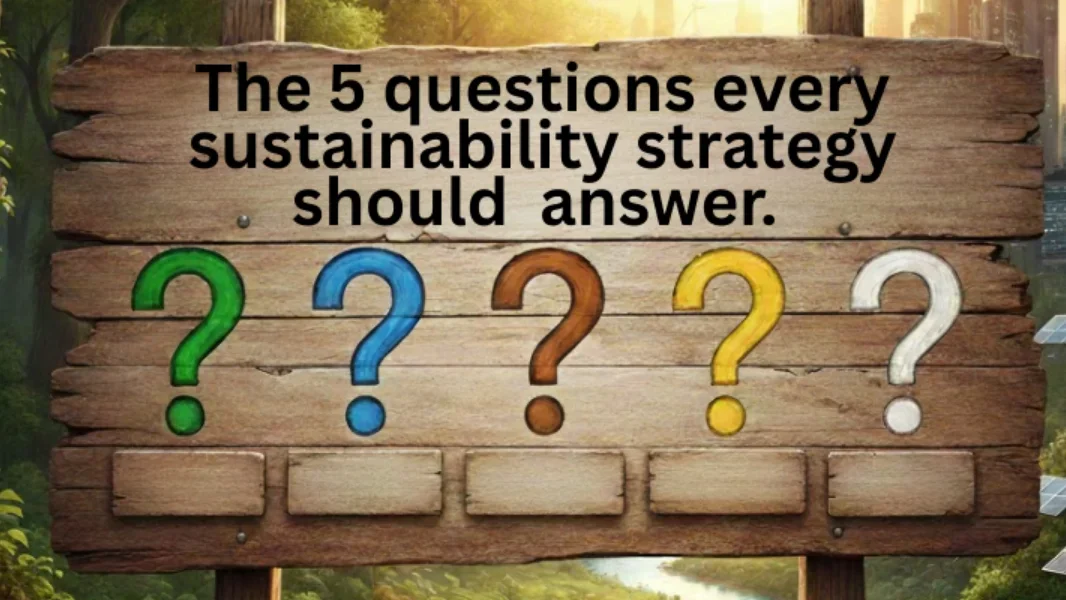
Here are the five every organisation in our sector should be able to answer.
1. Why are we doing this?
This is the most overlooked and most important question.
Is sustainability being driven by client demand? Brand positioning? Cost reduction? Risk management? Regulation? Or all of the above?
In events, travel, and hospitality, sustainability often touches sales, operations, procurement, and marketing simultaneously. Without a clear “why,” efforts quickly become fragmented, reactive, or driven by the loudest stakeholder.
A clear purpose creates alignment. It helps teams prioritise actions, communicate consistently with clients, and make confident decisions when trade-offs arise.
2. Where can we have the biggest impact?
Not all sustainability actions deliver the same value.
For hotels, this might be energy use, water efficiency, or food waste.
For events, it could be venue selection, production materials, delegate travel, or supplier choices.
For business travel, emissions hotspots often sit in flight policies, accommodation, and traveller behaviour.
A strong strategy focuses on material impact environmental, social, and commercial rather than spreading effort thinly across dozens of initiatives. This ensures sustainability efforts move the needle, rather than simply ticking boxes.
3. What’s realistic given our resources?
Ambition matters but so does feasibility.
Time, budgets, internal capability, data availability, and supplier influence all shape what is achievable. The hospitality, business travel and events sector operate under constant operational pressure, and strategies that don’t reflect this reality rarely survive implementation.
A good sustainability strategy balances aspiration with practicality, building momentum through achievable actions while creating a roadmap for longer-term transformation.
4. How do we measure success?
If success isn’t clearly defined, it can’t be managed.
Measurement goes beyond reporting emissions or publishing an annual statement. It’s about understanding what progress looks like for your organisation and tracking it in a way that supports better decision-making.
This might include operational KPIs, cost savings, client outcomes, supplier performance, or compliance readiness. The right metrics turn sustainability from a communications exercise into a management tool.
5. Who owns delivery?
Many sustainability strategies fail not because they are poorly designed but because no one truly owns them.
In complex organisations, responsibility can fall between departments, with sustainability sitting “everywhere and nowhere.” Clear governance, accountability, and ownership are essential to turning plans into action.
Embedding sustainability into existing roles, processes, and decision-making structures is often more effective than creating something entirely new.
Turning questions into action
Answering these questions well takes time, experience, and a deep understanding of how sustainability works in practice particularly in the fast-moving events, travel, and hospitality sector.
This is where the right support makes a difference. We help organisations cut through complexity, focus on what matters most, and build sustainability strategies that are credible, practical, and deliver real impact faster and with greater confidence.
Because sustainability works best when it’s clear, focused, and built for the realities of your business.
Ready to make your business more sustainable?
Whether you're just starting out or looking to take your strategy to the next level, we can help. From tailored consultancy to practical training, we work with businesses of all sizes to embed sustainability into every journey.
Get in touch with Sam Cande, Consultancy Director at 360 Consulting by Greengage, to explore how we can support your ESG goals.